Author · Speaker · Operator
Most organisations say they value relationships. Very few can show you the evidence.
Forty years inside hospitality, wellness, fitness and retail, watching which ones could.
Read the letter: a weekly argument on trust, behaviour and what actually holds under pressure.
Subscribe on LinkedInA weekly letter, roughly 1,000 words, on trust and behaviour.

Forty years in the room
I spent forty years inside real operations across hospitality, wellness, fitness, retail and B2B. Front line to boardroom, in Canada, Greece and Romania. I watched relationships succeed and fail at close range for four decades, and the same mechanics kept repeating across industries that never talk to each other.
Then I started writing down the mechanics. In 2025 that became the SOLAS project: three books so far, and a weekly letter.


-

My father’s restaurant
Vancouver
I started at fifteen, washing dishes in my father’s restaurant in Vancouver, and left school at sixteen. I bought the restaurant at twenty-one, bought out my partner at twenty-two, then redesigned it and reopened it as Broadway Ted’s Bistro. It became one of the busiest places on West Broadway.
-

The café and the club
Vancouver
Next came Rapture, Curios and Café, where everything was for sale except the counters and the espresso machine, including the table you sat at. Much of the furniture I built by hand. At the same time I ran food and beverage at Jericho Tennis Club, a member-owned club of around 3,000 members, joined only by recommendation. When I left, the members asked me to come back.
-

A seaside resort
Greece
I was hired as a receptionist at a seaside resort by an owner who had never met me. A month later I was running it. Over five years I gave a summer-only business an off-season, opening it to motorhome weekends for Greek families, and ran the large restaurant built beside it.
-

Premium fitness equipment
Technogym
Managing director of the official Romanian distributor for Technogym, Polar, Reebok, PowerBar and other brands, after running the fitness and wellness division at Elmec Romania. Most of our best contracts came from clients who sent us the next one.
-
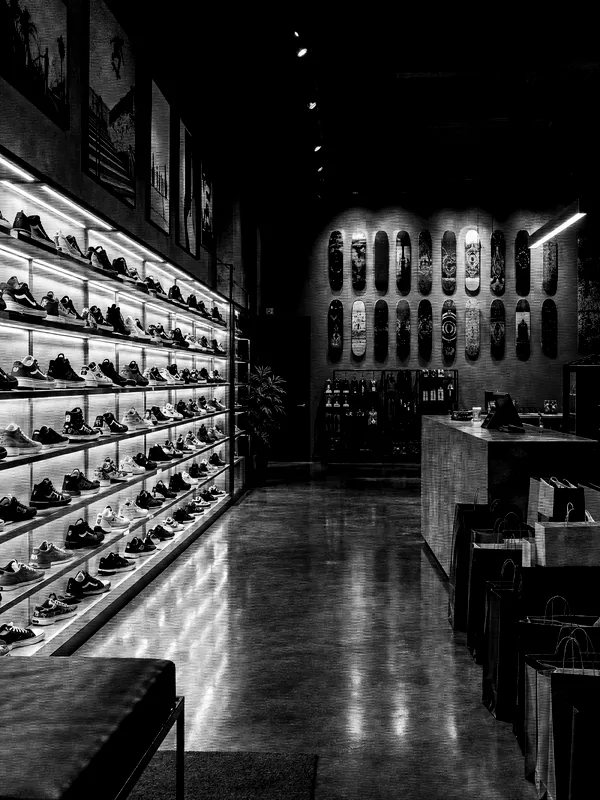
A global brand’s first store
Vans
General manager for the launch of Vans in Romania, including the country’s first flagship store. Retail from day one: the store, the partners, the team and the standards.
-
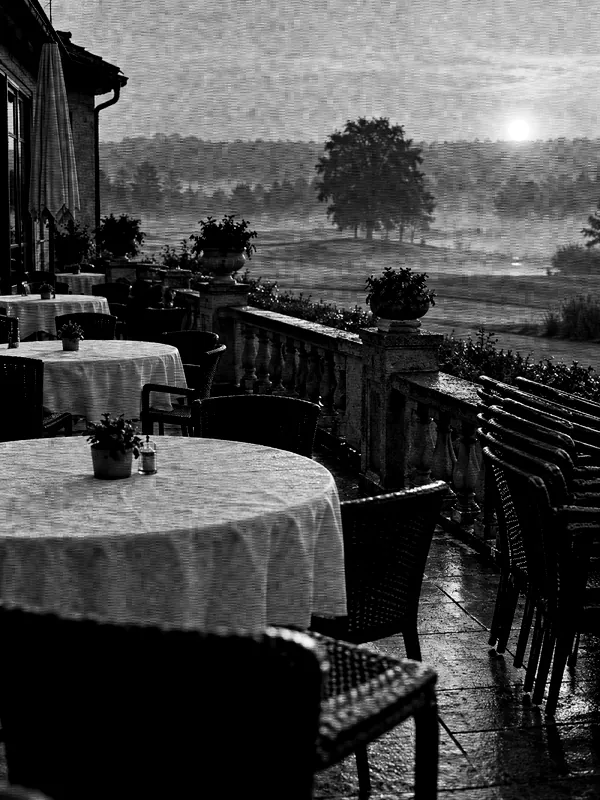
The country club
Stejarii Country Club
General manager of a flagship private members’ club in Bucharest, with around 200 staff and a membership growing towards 2,000. Opened the outdoor Olympic pool and launched a bistro bar, menu included.
-

The national chain
World Class Romania
Hired as customer care consultant to what was then Romania’s largest fitness chain. Mystery-shopped 35 of its clubs, trained staff across the network, then oversaw eight clubs in four cities as regional advisor.
-

The resort, twice
Sky Blue Resort
Hired to open the hotel in 2015, then brought back in 2021 to rebrand and run the whole resort as resort director: about 150 staff, and an open door for every one of them.
-

The water park
AMCORP
Chief operating officer of a development group’s leisure division, on a consulting contract, running a 100,000 m² water park and the hotel, fitness and spa projects planned around it.
-

My own company
Twenty years
In twenty years in Romania I never worked as an employee. Every title I held there, I held as a consultant through my own company, with seminars, audits and training for other businesses in between, nearly three years teaching spa and wellness professionals, and hundreds of weddings, private and corporate events and expos, many of them set up by my own hands. Not every room worked. I have started again from zero more than once, and those rooms taught me the most.
Trust isn’t built by what we say we value.
It’s built by the evidence of how we behave.
A statement on a website saying we love our customers is a claim.
The employee who notices someone needs help is evidence.
Claims cost nothing, which is exactly why nobody believes them.
Infrastructure is not proven by a statement about infrastructure.
It is proven by what happens when load is placed on it.
A complaint. A lost sale. A delay. A decision where you can either maximise today’s revenue or protect the relationship.

Three books. One argument.
-

Are We Good Customers?
The marketplace, from the customer’s side. Hypocrisy, ego, and the bad behaviour we keep rewarding with our money.
Buy on Amazon -

Are You Worth Remembering?
The operator’s side. How retention, referrals and loyalty get built through gratitude rather than discounts.
Buy on Amazon -

Are Men Stupid? The Mirror
The mechanics inside the system. Trust, attention, projection, and what people are really buying when they think they are buying something else.
Buy on Amazon
Systems used to build trust. Increasingly they extract it. These three books are an argument about the difference.

The trilogy
The Trust Doctrine
If you understand trust, you stop competing on price, attention, and noise. You start building systems people do not want to leave.
Buy on Amazon
Most people who speak about trust have studied it. I ran the rooms.
Speaking
I speak about trust as infrastructure: how it is built, how it is spent, and why most organisations only discover they had none when something goes wrong.
What I speak about
-
Trust as infrastructure
Trust is load-bearing, and like any infrastructure it is only proven when weight is placed on it: a complaint, a delay, a lost sale, a decision between today’s revenue and tomorrow’s relationship.
-
Why discounts destroy trust faster than they create sales
The discount is not a pricing tactic, it is behavioural training. What it teaches customers, and what to do instead.
-
The last two minutes
Where loyalty is actually decided, why almost nobody designs the ending, and what it costs them.
-
Care is not a department
Why concentrating care into a job title quietly excuses everybody else, and what has to happen instead.
-
AI, human capability, and what should not be automated
Automation can reduce today’s labour cost while increasing tomorrow’s talent cost. What happens to the path from junior to senior when the work people used to learn from disappears.
What I deliver
-
Training day, full day
The format I have run most often and the one I am strongest in. A working session with a team, built around their actual operation rather than a generic deck.
-
Seminar, half day
The same approach, compressed. Suits larger groups and conference programmes.
-
Talk or keynote, 45 to 60 minutes
One argument, properly made, with the room’s own business in it.
-
Practical AI session, three hours
Hands-on, for teams who have been told to use AI and given no idea how. Setup, prompting, projects, personalisation, and the harder question of what should not be automated.
Every format is customised to the brief. I do not deliver the same hour twice.
Diagnostic, before any of the above
Mystery shopping and an operational audit, delivered as a written report. I have mystery-shopped 35 clubs for one national chain and five for another, plus retail, hospitality and professional services. A day of training built on what a room actually does beats a day built on what it says it does, and the report is usually the first time anyone has written the truth down.
Works internationally. All sessions and interviews in English.
Fees depend on format, location and audience. I also accept a small number of unpaid engagements each year where the room is right.

Past appearances
-
Capital de Încredere, with Lorena Chirilă, ProFI24 TV
-
Expat Life with Steve Allison, episode 297, Radio Guerrilla
-
Moderator at the TopHotel Conference. Member of the TopHotel Awards jury (2026).
The Letter
Read allA weekly letter on trust, behaviour and what holds under pressure, now in its second year.
- The Best Waiter I Ever Let Go... He was the best salesperson on the floor, and I let him go anyway. The decision was the easy part, but how I did it is the reason I believe we parted with respect.
- The Numbers Were Wrong. The Readers Were Not... For two weeks this month, my numbers told me almost nobody was reading this letter anymore. I rebuilt my writing around them. Then I discovered the numbers were the thing that had broken.
- Our Best Isn’t Our Most Expensive... I learned to talk customers out of the expensive option when I was at the beginning of my career, and I did it to make the bill bigger as well as my tips. It took me years to understand what I had actually learned.
Read the letter: a weekly argument on trust, behaviour and what actually holds under pressure.
Subscribe on LinkedInA weekly letter, roughly 1,000 words, on trust and behaviour.
Work With Me
Most organisations do not have a trust problem they can see. They have a retention number that is slightly worse than last year, a complaint pattern nobody has connected, and a feeling that something is leaking.
If that sounds familiar, book thirty minutes. No charge, no pitch. We look at where the leak is and whether it is worth doing anything about.
About
I started at fifteen, washing dishes in my father’s restaurant in Vancouver. I left school at sixteen, worked every position in that building, and bought it at twenty-one.
Since then: four decades across hospitality, wellness, fitness, retail, entertainment and B2B, in Canada, Greece and Romania. Front line to boardroom and back again.
I am not an academic who studied this. I ran the rooms, made the mistakes, and wrote down what repeated.
Some of the rooms I ran, I also built. I renovated my own restaurant, built furniture for my café by hand, and spent six months building a school myself, designing everything and doing the work with my own hands.
I am the author of three books. Are We Good Customers? examines the marketplace from the customer’s side. Are You Worth Remembering? is an operating system for retention, referrals and loyalty built on gratitude rather than discounts. Are Men Stupid? The Mirror uses an uncomfortable case study to examine trust, attention and what people are really buying when they believe they are buying something else.
My central argument is that trust is not a feeling but a structure, built from evidence rather than declarations, and that the systems most of us now live inside are designed to harvest it faster than they earn it.
I write a weekly letter on trust and behaviour, and work internationally in English.

Read. Reflect. Return better.